

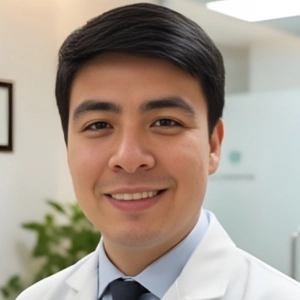
Roy Arnold Saldana Vargas
Lambayeque Regional Hospital, PeruPresentation Title:
Case report: Uterine arteriovenous malformation
Abstract
A 36-year-old woman with a history of cesarean section and prior uterine curettage presented with persistent abnormal uterine bleeding and severe anemia. Transvaginal Doppler ultrasound revealed serpiginous anechoic spaces within the myometrium, showing turbulent, high-velocity, low-resistance flow consistent with an acquired uterine arteriovenous malformation (UAVM). Due to the high risk of recurrent hemorrhage and the patient's lack of desire for future fertility, a total abdominal hysterectomy was performed. Histopathological analysis confirmed the diagnosis, demonstrating abnormal arteriovenous communications.
The postoperative course was favorable, with rapid clinical and hematologic improvement. This case underscores the importance of maintaining a high index of suspicion for UAVM in women of reproductive age presenting with unexplained heavy uterine bleeding, especially after uterine instrumentation. Doppler ultrasound is an essential first-line diagnostic tool due to its ability to detect vascular abnormalities in real time. Early recognition and individualized management are critical to avoid life-threatening complications.
Biography
To be Updated

Organization Location
1309 Coffeen Avenue, STE 1200, Sheridan, Wyoming 82801, USA
Mail us at
Program Enquiry
gynecologysummit@scientexconference.org
General Enquiry
contact@scientexconferences.com
Registration Enquiry
finance@scientexconferences.com
gynecologysummit@scientexevents.org
Our Social Presence
Call us at
USA : (+1) 217 291 7151